Comfortable seating and quieter options
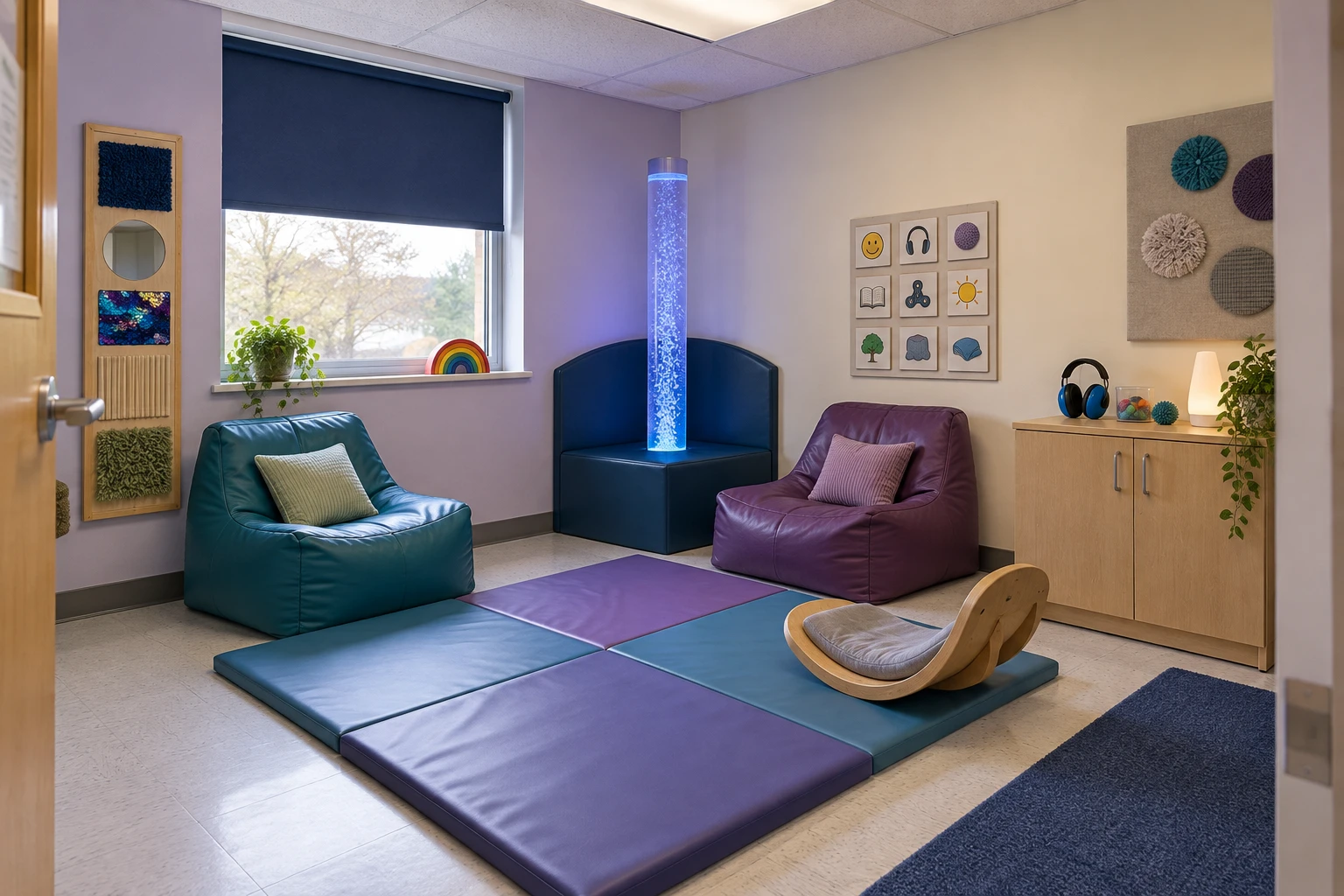
Two foam lounge seats would provide places to sit during a supported break. Noise-reducing earmuffs would also be available for students who find them helpful.
THE SENSES SENSORY ROOM
A sensory room is a space where students can take a supported break and explore options that meet their sensory needs. It may include comfortable seating, movement equipment, different textures, and adjustable lighting. Some students may need less noise or visual distraction, while others may benefit from an opportunity to move. The room’s setup and use should reflect these differences.
The proposed SENSES sensory room would give elementary students a place to use supports with a trained adult’s guidance. Students would have choices, and staff would observe their responses to understand what helps them feel comfortable and ready to take part in school activities.
The goal is to support participation in learning, play, and classroom routines. The room would never be used as a reward, punishment, or place to isolate a student.
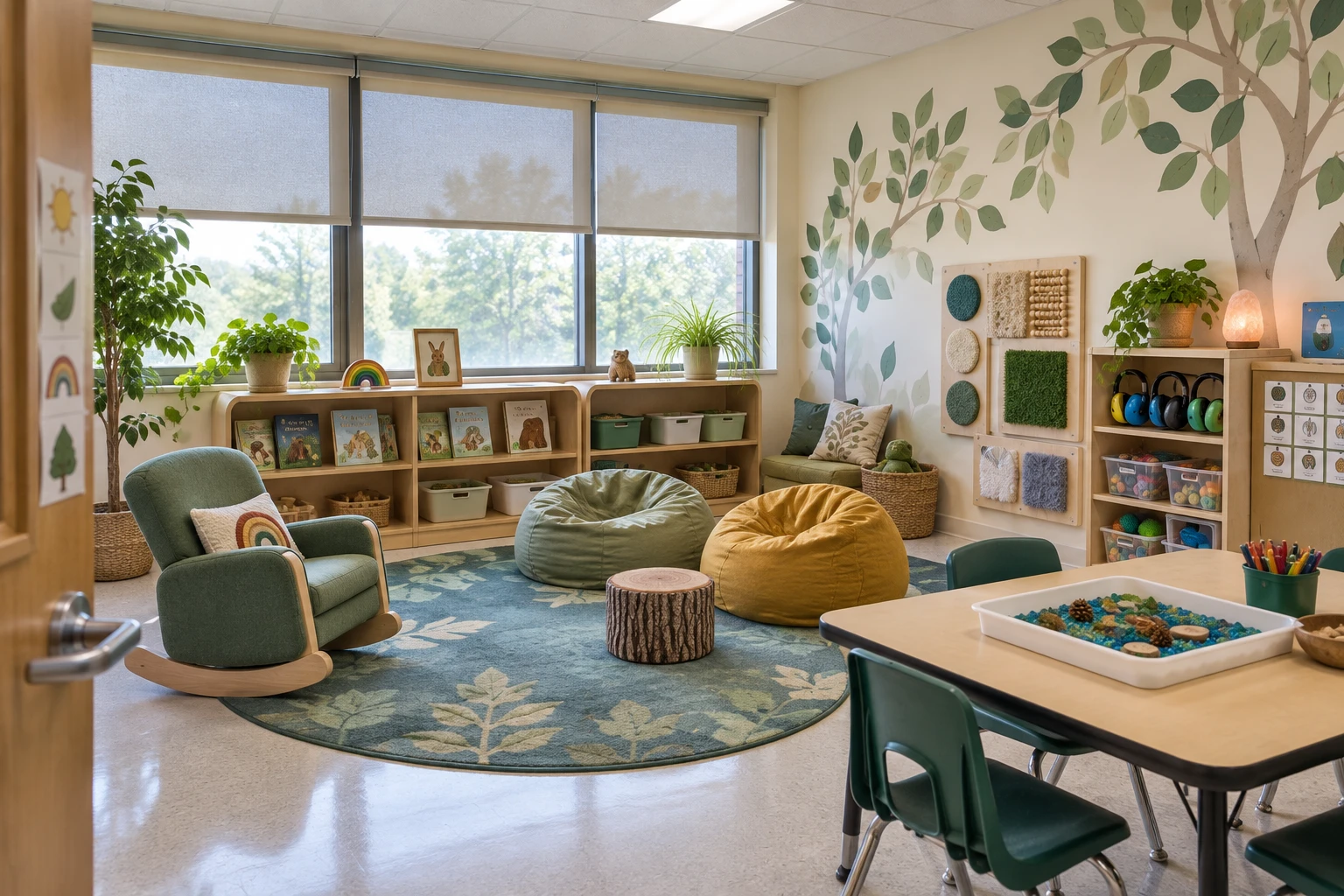
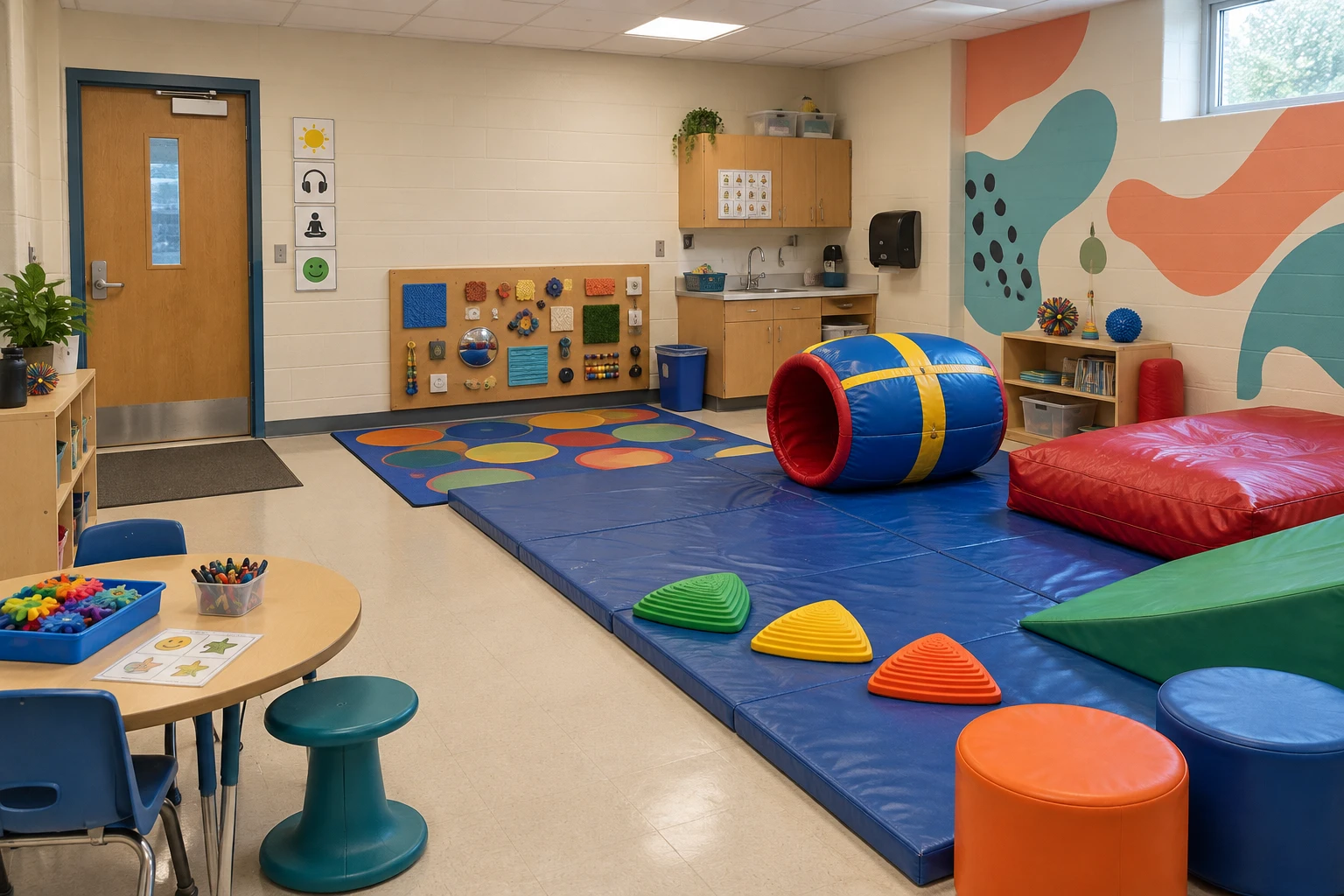
The SENSES room would offer options for sitting comfortably, moving, and exploring different kinds of sensory input. The examples below show several ways a sensory room can look, from active movement areas to quieter spaces. The final layout would be developed with the school team and occupational therapist, considering students’ needs, accessibility, and available space.
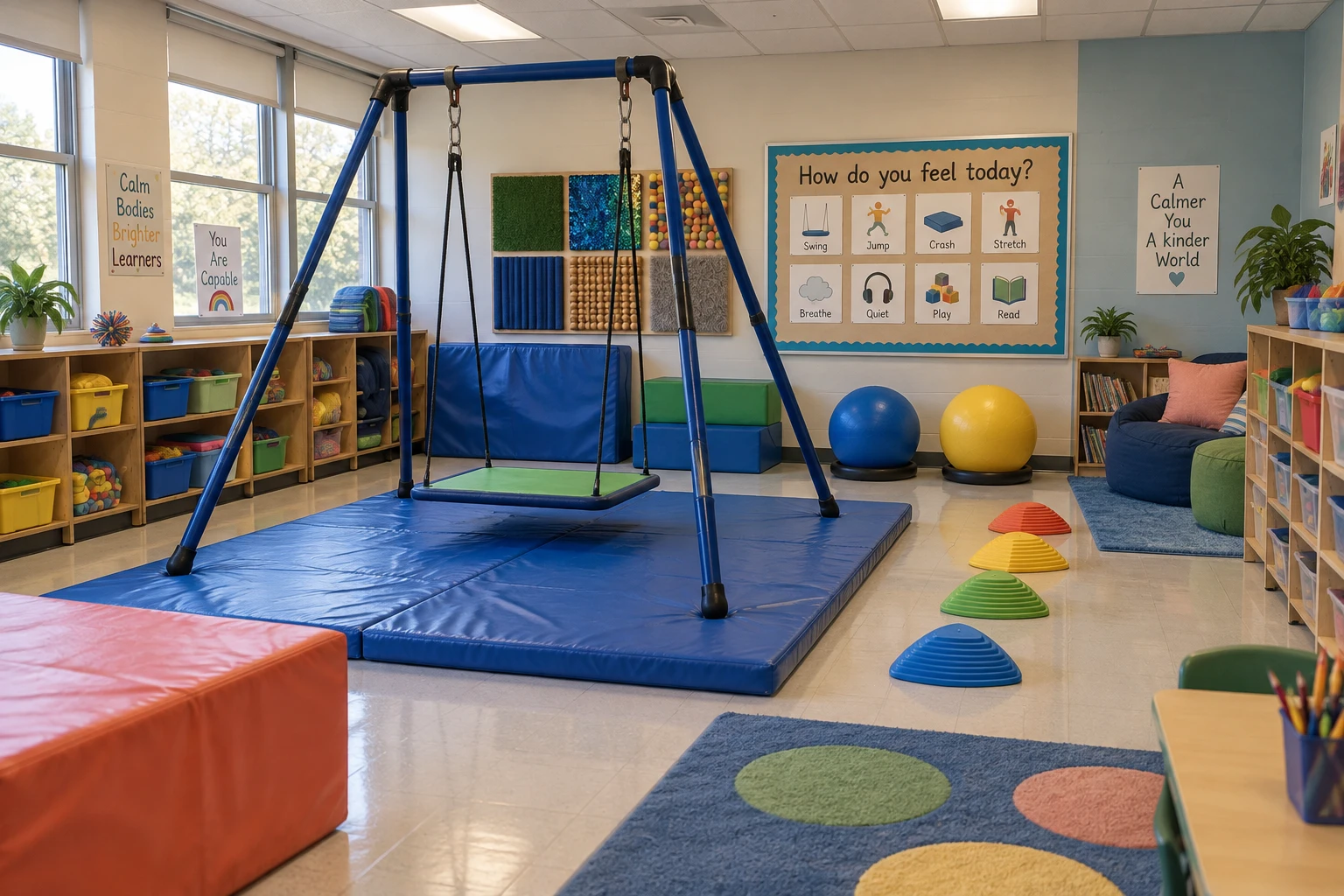
AI-generated illustrations inspired by school sensory-room examples. These show possible layouts, not an existing SENSES room or a finalized equipment plan. The school team and OT would guide equipment selection, installation, and use.
Two foam lounge seats would provide places to sit during a supported break. Noise-reducing earmuffs would also be available for students who find them helpful.
A padded floor mat, crash mat, and rocking equipment would provide different movement options. Staff would follow guidance on appropriate activities, supervision, and the space needed around each item.
A bubble tube, sensory gel tiles, and tactile wall panels would offer visual and touch-based experiences. These features could be introduced selectively. Having several options available does not mean using them all at once.
Visual supports and timers could help students understand their options and what comes next. Smaller materials, such as sensory balls, fidgets, and putty, would be organized in labeled containers. Items requiring additional guidance, including weighted lap pads, would be stored for staff-supported use.
The proposed SENSES equipment offers different options for students to explore with staff guidance. The school OT would help the team choose appropriate supports and review how students respond.
Two soft seats would provide comfortable places to sit during a break. Students could choose seating that fits their comfort and positioning needs.
These items would provide options for planned movement activities. Staff would follow equipment instructions and OT guidance on appropriate use and supervision.
Moving bubbles and light would offer something to watch. Staff could adjust or turn off the lighting depending on the student’s preference and response.
These materials would offer different textures and visual effects to explore. Students could choose whether to interact with them.
Earmuffs would offer an option for reducing surrounding sound. Staff would help students use them while maintaining access to instructions and important sounds.
These would be considered only with individualized OT guidance. They would not be offered automatically to every student or used to restrict movement.
Sensory balls, fidgets, and putty would provide handheld options to explore. Visual choices and timers would help students communicate preferences and understand the routine.
The goal is to find supports that help a student take part in school activities. Staff would adjust or stop an activity if the student shows discomfort or it makes participation harder.
A useful sensory room starts with understanding the students who will use it. The SENSES team would work with school staff, students, families, and the school OT to plan a space that fits their needs and the school’s available resources.
Identify which school routines students need support with and how the room could help. This purpose would guide decisions about equipment, layout, and room-use procedures.
Window coverings and adjustable lighting would give staff options for changing the environment. Music, lights, and other sensory features would be used selectively, based on students’ preferences and responses.
Keep pathways and exits clear, allow space for mobility devices, and leave appropriate clearance around movement equipment. Seating and materials should be accessible to the students using them.
Arrange quieter options away from movement activities when space allows. Store unused materials to reduce clutter, and position furniture so staff can supervise students throughout the room.
The proposed SENSES room would serve approximately one to three students at a time. Actual use would depend on the room’s size, available staff, equipment, and the support each student needs.
Use the proposed equipment list as a starting point. Student feedback, staff observations, and available school resources would help the team decide what to keep, change, or add as the pilot develops.
Clear routines would help keep the SENSES room organized and ready for students. The school team would assign responsibility for cleaning, equipment checks, restocking, and reporting concerns.
Staff would check that pathways are clear and equipment is in good condition. Damaged items would be taken out of use and reported to the person responsible for the room.
Shared equipment would be cleaned according to school procedures and manufacturer instructions. Materials would be returned to their designated places, with cleaning products secured away from students.
Simple words and pictures would explain how to choose an activity, ask for help, and return materials. Staff would introduce these expectations and provide reminders as needed.
Staff would report missing supplies, equipment problems, or difficulties using the space. They would also share what is working well so helpful routines can be continued.
The first SENSES room would be a starting point. During the pilot, the team would gather feedback from students, families, and school staff to learn how the space is being used and what needs adjusting.
Ask what feels comfortable, what they prefer, and what they would like to change. Students could share through words, pictures, gestures, or their usual communication methods.
Review whether room visits help students return to learning, play, and classroom routines. Sitting quietly would not be the only sign that a support is helpful.
The team might rearrange equipment, simplify choices, change room-use procedures, or provide more staff training. Decisions would be based on feedback and observations rather than assuming that more equipment is always better.